Research Stories

SAEES

Oral Presentation

Research Highlight: human excreta-derived compost for Sustainable Agriculture

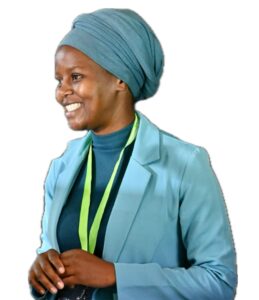
Master’s student Ms Sinikiwe Khumalo’s research will be presented and highlights the potential of using human excreta-derived compost to enhance soil fertility and promote sustainable agriculture. She evaluated the effects of mixing dewatered sewage sludge with organic green waste at different ratios and turning frequencies on compost quality and plant growth. The experiment using cucumber (Cucumis sativus) as the test crop demonstrated improved seedling growth with compost treatments compared to commercial soil mixes. Additionally, a survey of UKZN students revealed that over 60% were willing to purchase food fertilised with co-compost, reflecting the growing acceptance of human excreta-derived compost. This research shows promise in producing high-quality compost and fostering consumer awareness of its benefits in agriculture.


Flash Presentation

Innovative Technology for Agriculture: UAVs in Maize Moisture Monitoring

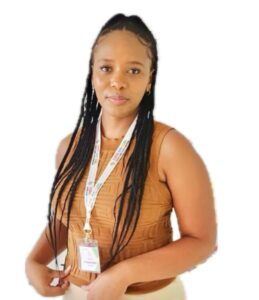
PhD candidate Ms Snethemba Ndlovu will present her research that explores the potential of unmanned aerial vehicle (UAV) technology to develop early warning systems for maize moisture stress, offering improved resilience and climate adaptation for smallholder farmers in water-scarce regions. Funded by the Water Research Commission, Sustainable and Healthy Food Systems Southern Africa project, and the National Research Foundation, she analysed maize leaf water content using equivalent water thickness and fuel moisture content. She successfully detected moisture variations throughout the maize growth cycle. UAV-based data, particularly from near-infrared and red-edge wavelengths, accurately quantified maize water content, with the highest sensitivity during early reproductive stages. This approach provides a valuable tool for monitoring crop health and supporting agricultural decision-making in smallholder maize farming systems.

SCP

Oral Presentation

Harnessing Cannabis sativa for Sustainable Heavy Metal Remediation in Polluted Water

Ms Thandeka Mbatha’s master’s research focuses on using Cannabis sativa as an eco-friendly and cost-effective solution to remove harmful heavy metals, like lead (Pb²) and copper (Cu²), from polluted water. By utilising cannabis as agricultural waste in various forms—raw, treated with glycine, and treated with sodium bicarbonate—her study shows significant success in cleaning wastewater through an adsorption process. The results demonstrate that Cannabis sativa effectively removes up to 98.9% of lead and 93.1% of copper, offering a promising alternative to conventional, less sustainable methods.


Flash Presentation

Optimizing Wind Energy Assessment in Nigeria: A Comparative Study of Statistical Models

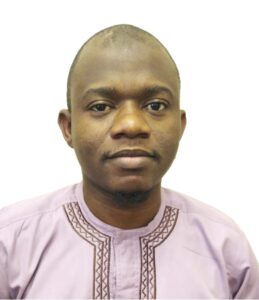
Mr Saheed Jimoh’s research addresses the critical need for accurate wind energy assessment in Africa, a continent rich in conventional and renewable energy resources. His study compares various statistical models to determine the best fit for predicting wind energy potential based on 20 years of wind speed data from 12 meteorological stations across Nigeria.

The research highlights the superior performance of the mixture Weibull distribution, which more accurately captures wind speed variations compared to traditional models. This supports identifying the most suitable locations for wind energy development, particularly in northern Nigeria and Lagos, where wind speeds are most favourable. The findings offer valuable insights for advancing wind energy technologies and strategic planning for sustainable energy development in Nigeria, helping to harness renewable resources and reduce dependence on fossil fuels.

SLS

Oral Presentation

Antibiotic Resistance in Aquatic Ecosystems: Assessing the Impact of Wastewater on Fish Microbiomes in the Msunduzi River

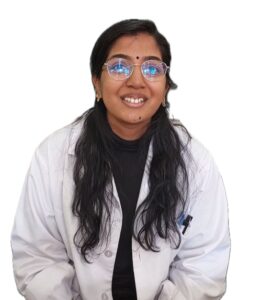
Ms Suveena Govender’s master’s research addresses the growing concern of antibiotic-resistant microbes (ARMs) in wild aquatic populations, focusing on their presence in fish species from the Msunduzi River in KwaZulu-Natal. The study investigates how antibiotic residues from wastewater impact the microbiomes of fish like Cyprinus carpioClarias gariepinus, and Labeobarbus natalensis, identifying bacteria that are resistant to multiple antibiotics, including critical drugs like tetracycline and third-generation ß-lactam antibiotics.

The research reveals that fish species with different feeding behaviours, particularly sediment feeders, tend to harbour bacteria resistant to various antibiotics, such as fluoroquinolones and carbapenems. These findings are concerning because consuming such fish could introduce antibiotic-resistant genes into the human gut microbiome, reducing the effectiveness of medical treatments.

By identifying the reservoirs of antibiotic resistance in wild fish populations, Ms Govender’s work supports the OneHealth initiative, which aims to understand and mitigate the spread of antibiotic-resistant genes between wildlife, humans, and livestock. This research underscores the need for strategies to prevent further resistance distribution, helping protect both environmental and public health.


Flash Presentation

Optimizing Bioethanol Production from Sugarcane Molasses: Leveraging AI and Yeast Fermentation for Sustainable Energy Solutions

Ms Caitlyn Gobey’s master’s research focuses on improving bioethanol production from sugarcane molasses, a crucial step towards sustainable energy solutions. Using the yeast Saccharomyces cerevisiae as a fermentation agent, the study explores how a genetic algorithm—a type of artificial intelligence—can be applied to optimise the fermentation process and maximise bioethanol yields.

 By adjusting key factors like temperature, pH, and the addition of specific nanoparticles, the research aims to enhance the efficiency of converting sugarcane molasses into bioethanol. This novel approach combines the adaptability of S. cerevisiae with advanced computational methods, providing a more efficient way to produce bioethanol at an industrial scale.

The insights from this study could help make renewable energy production more viable, supporting efforts to reduce reliance on fossil fuels and promoting cleaner energy sources in the long run.


SMSCS

Oral Presentation

The growing concern of antibiotic-resistant microbes (ARMs) in wild aquatic populations, focusing on their presence in fish species from the Msunduzi River in KwaZulu-Natal

Ms Suveena Govender’s master’s research addresses the growing concern of antibiotic-resistant microbes (ARMs) in wild aquatic populations, focusing on their presence in fish species from the Msunduzi River in KwaZulu-Natal. The study investigates how antibiotic residues from wastewater impact the microbiomes of fish like Cyprinus carpioClarias gariepinus, and Labeobarbus natalensis, identifying bacteria that are resistant to multiple antibiotics, including critical drugs like tetracycline and third-generation ß-lactam antibiotics.

The research reveals that fish species with different feeding behaviours, particularly sediment feeders, tend to harbour bacteria resistant to various antibiotics, such as fluoroquinolones and carbapenems. These findings are concerning because consuming such fish could introduce antibiotic-resistant genes into the human gut microbiome, reducing the effectiveness of medical treatments.

By identifying the reservoirs of antibiotic resistance in wild fish populations, Ms Govender’s work supports the OneHealth initiative, which aims to understand and mitigate the spread of antibiotic-resistant genes between wildlife, humans, and livestock. This research underscores the need for strategies to prevent further resistance distribution, helping protect both environmental and public health.


Flash Presentation

Enhancing Cosmological Mapping

Ms Tasmiya Papiah’s research master’s focuses on enhancing the precision of HIRAX (Hydrogen Intensity and Real-time Analysis eXperiment), an array of 1024 radio dishes aimed at mapping the universe’s neutral hydrogen using its 21 cm emission line. By studying these signals, HIRAX can trace the Baryon Acoustic Oscillations (BAO)—ripples left from the early universe’s sound waves—providing valuable insights into the universe’s expansion rate and the properties of dark energy.

A key challenge in this project is accurately characterising the telescope’s beam, which is essential for interpreting radio observations. Traditional methods, using transiting astronomical sources, are time-consuming and limited in coverage. To address this, Ms Papiah’s work explores an innovative solution: using a programmable drone fitted with a noise transmitter to rapidly map the beam pattern. This method allows for high signal-to-noise measurements across various beam positions, enabling a comprehensive and efficient mapping of the telescope’s response. 

The outcomes of this research will improve HIRAX’s ability to collect precise cosmological data, advancing our understanding of the universe’s structure and evolution. The approach also has broader applications in radio astronomy, offering a faster and more accurate method for beam characterisation in other large-scale observatories.


SENG

Oral Presentation

Unlocking Sustainable Energy: Harnessing Small-Scale Run-of-River Hydropower in South Africa’s Tugela River Catchment

Ms Bokang Sithole’s research addresses South Africa’s energy crisis, focusing on the potential of small-scale run-of-river (RoR) hydropower plants to provide a sustainable and cost-effective solution. Her study explores the hydropower potential of the Tugela River Catchment in KwaZulu-Natal, a region where energy needs often surpass supply, impacting economic growth and agriculture, particularly in rural areas.

By analysing 26 gauged sites using flow models, hydrographs, and GIS technology, Ms Sithole’s work reveals that most locations in the Tugela River Catchment are suitable for developing small-scale hydropower plants with capacities between 1 and 10 MW. These plants could support local communities by providing clean, affordable electricity for domestic use, farming, aquaculture, and hydroponic systems. Her findings suggest that small-scale RoR hydropower can play a crucial role in reducing reliance on fossil fuels and advancing regional economic development.

Though challenges like missing data and the need for comprehensive environmental assessments exist, the study recommends expanding hydrological networks and involving local communities to ensure the long-term success and sustainability of such projects.

Flash Presentation

Advancing Sustainable Building Materials: Developing Sawdust-Reinforced Polypropylene Composites for the Construction Industry.

Mr Ipoteng Justice Mphahlele’s research focuses on developing sawdust-reinforced polypropylene (PP) composites to enhance the material’s properties for practical applications, particularly in the building industry. By treating sawdust with a 6% sodium hydroxide solution, the study improves the adhesion between sawdust and PP, which is then processed using extrusion-injection moulding. The research examines key mechanical properties like tensile, flexural, and impact strengths, as well as thermal stability, temperature-dependent mechanical properties, and water absorption. Results show that specific sawdust particle sizes significantly influence the strength and stability of the composites, with 20% sawdust and 80% PP blends achieving the best performance in tensile and flexural strength. These composites’ improved mechanical properties and water resistance suggest their suitability for building materials, offering a sustainable alternative by utilising sawdust waste. This research contributes to real-world solutions by promoting eco-friendly materials in construction, addressing waste management, and enhancing resource efficiency.